Reinventing the Brand
By the time Beautyfluff had survived the shutdown, the next question was no longer whether it could continue. It was what, exactly, it should become.
COVID had stripped the business down to its essentials. In the process, it forced Yennie and Eric to look more closely at what Beautyfluff had always been, and what it no longer wanted to be.
They realized they didn’t want Beautyfluff to feel like every other spa or medspa that happened to offer a little bit of everything. After everything they had built, lost, and rebuilt, they wanted to define the brand more clearly on its own terms.
They wanted to specialize in skin.
Not in the vague way many beauty businesses claim to “do it all,” but with real focus. They believed in being exceptional at one thing rather than becoming a jack of all trades. Just as there are nail salons devoted to nails and massage spas devoted to bodywork, they wanted Beautyfluff to become known for something distinct: result-driven relaxation.
That phrase became the center of the brand.
Before COVID, Beautyfluff’s identity had been shaped partly by variety. Yennie and Eric had curated skincare brands from around the world, wanting clients to feel as though they were traveling without ever leaving the treatment room. One day, someone might experience a facial inspired by France. Another day, a treatment shaped by a different tradition. At the time, that range felt expansive.
But after COVID, it began to feel fragmented.
Inventory became harder to predict. Shipments were delayed. Depending on so many outside brands no longer felt sustainable. At the same time, Yennie and Eric already knew more about their clients than they had when they first started curating those lines. They knew what people loved, what their skin responded to, what felt too harsh, what fell short, and what they kept coming back for. Years of paying attention had given them something more valuable than variety: clarity.
That was the turning point.
They realized Beautyfluff didn’t need to be defined by how many brands it carried, but by the consistency, experience, and results it could create itself. Instead of continuing to curate from the outside, they began creating from within.
They wanted to build The Beautyfluff Experience more fully than before.
That shift changed their priorities. As founders, they became more focused, more deliberate, and even more invested in learning. They attended industry shows, took business courses, and studied ingredients more deeply than ever before. They paid closer attention to textures, scents, essential oils, allergens, and sensitivities. They wanted to find the balance between clinical performance and a more natural, thoughtful approach. At the same time, they continued strengthening the team by bringing in skilled practitioners who could uphold the level of care they believed Beautyfluff should represent.
Rebranding, for them, wasn’t about becoming something new for the sake of novelty. It was about bringing the outside of the brand into alignment with what had already been there all along.
That shift showed up everywhere. It showed up in the website, which was redesigned to feel more approachable, more transparent, and easier to understand. They wanted people to truly see Beautyfluff and understand its philosophy rather than feel confused by it or shut out by it. They added before-and-after photos, shared more of their story, and introduced staff biographies so clients could get to know the people behind the treatments.
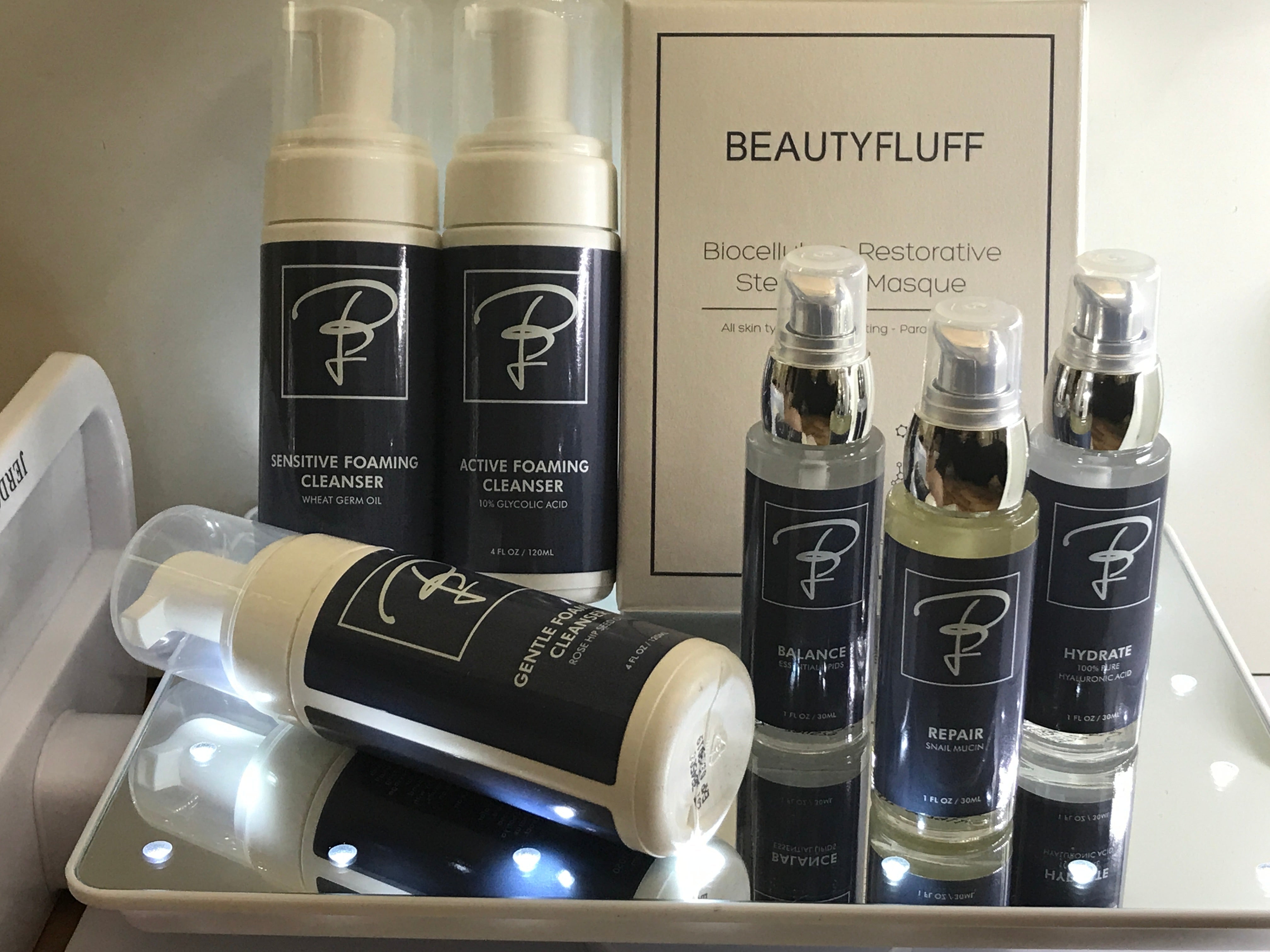
It showed up in the product line too. Yennie and Eric wanted products that felt effective, results-driven, and genuinely good on the skin. Their goal was balance: not so clinical that the products felt harsh or inaccessible, but not so natural that they stopped delivering visible results. Some of those products became deeply personal to them, especially the biocellulose stem cell mask, which Yennie described as “Yennie in a package.” It came from years of listening closely to clients, noticing sensitivities, understanding allergies, and wanting something more personalized than what already existed.
And it showed up in the services themselves.
Beautyfluff’s treatments became even more personalized and client-driven than before. Yennie and Eric listened carefully to what clients were asking for, what they needed, and what they weren’t finding elsewhere. Those voices helped shape what came next. What they wanted people to feel through all of these changes was simple: that every detail mattered. The scent. The lighting. The room temperature. The music. The treatment itself. The human connection.
Beautyfluff was never just about what service someone booked. It was about how they felt while they were there, and whether they left feeling cared for in a way that was both visible and hard to explain.
When asked to describe the post-COVID version of Beautyfluff in one word, Yennie’s answer was simple:
Reborn.
Not because the earlier versions of Beautyfluff were mistakes. They weren’t. Each stage of the business had built toward what came next. But after COVID, the brand returned to itself with sharper clarity, stronger conviction, and a fuller sense of its own identity.
Now, Beautyfluff stood more fully in its own name. And once that identity became clearer, the business itself was ready to grow in new directions.
Comments